
Physical Therapy Can Help You Resolve Unwanted Knee Pain
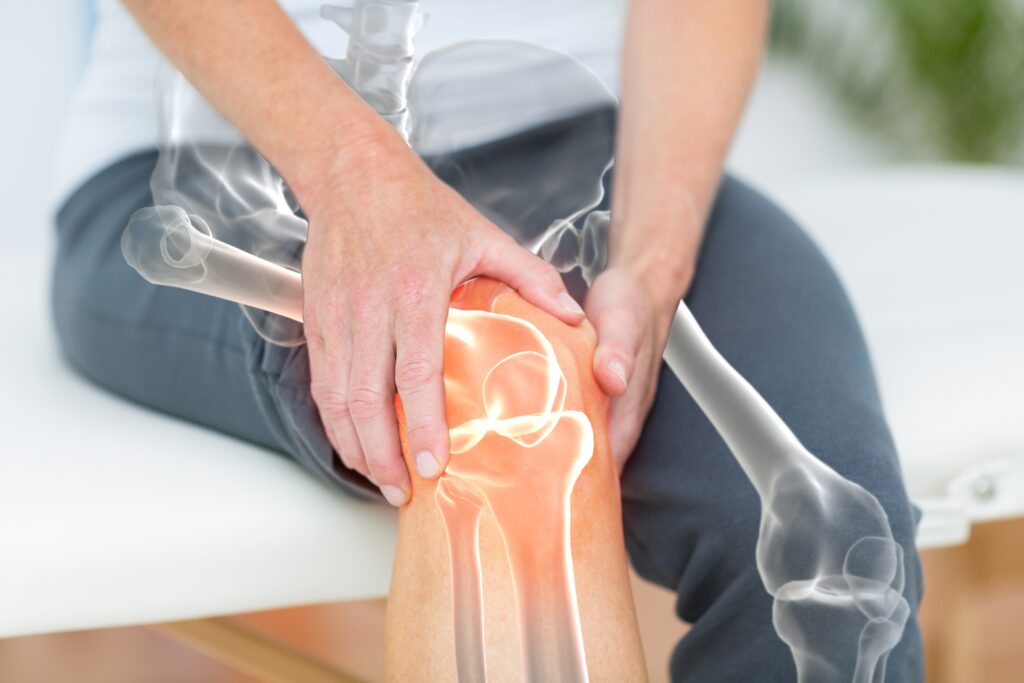
Do you experience pain and swelling with squatting or climbing stairs? Do your knees often catch or lock up, making it difficult to perform daily tasks that once seemed simple? At Joint Restoration Center in Tulsa, OK, our physical therapists can help you find relief and get you moving again!
Knee pain can be debilitating, making it difficult to walk, run, and move. It may even hinder your ability to do simple things like sitting through a movie or a long car ride. The location of your pain helps determine which structures are involved and can help ensure proper treatment.
Often the pain leads to avoiding activity, but this strategy does not help in the long run. Inactivity often leads to more dysfunction and disability. Physical therapists are movement experts, and if your symptoms are severe or last more than a few weeks, your first step should be to contact our physical therapists!
At Joint Restoration Center, we can get you moving once again by relieving your pain and enhancing your body’s natural healing process. Call today to schedule an appointment with one of our experts!
What are the most common knee injuries?
Your knee is one of the largest joints in your body, made up of a complex system of bones, tendons, and ligaments. Knee injuries can result from direct contact or a sudden movement that strains the knee. When there is no specific event connected to the damage, the most common knee pain causes are aging, injury, or repeated stress on the knee.
Knee pain can be mild or severe and includes sprained ligaments, cartilage tears, tendonitis, and arthritis.
Some other common causes of knee pain include:
Arthritis. The most common type of arthritis for knee pain is osteoarthritis (OA). This condition occurs when the cartilage surrounding your joints deteriorates, and the joint no longer has a sufficient cushion between the bone. This leads to joint inflammation with varying levels of pain and dysfunction.
Cartilage Injuries. There are two common cartilage injuries:
- Meniscus injury: The meniscus serves as a shock absorber and helps maintain stability in the knee. A meniscus tear can be caused by contact or non-contact activity when the knee twists suddenly. Some tears are the result of wear and tear.
- Articular cartilage injury: The articular cartilage is a smooth covering on the bones that allows for frictionless sliding of one bone on another. Articular cartilage is injured by direct trauma or wear and tear.
Ligament Injuries: Our bones are connected by ligaments. The ligaments in your knee act like leather straps to hold the bones together and keep your knee stable. Ligaments are often stretched and/or torn during a sudden motion. The important ligaments in the knee include:
- Anterior cruciate ligament (ACL). It is located in the center of the knee and controls rotation and forward movement of the shin bone.
- Posterior cruciate ligament (PCL). It is located in the back of the knee and controls the backward movement of the shin bone.
- Medial collateral ligament (MCL). The medial collateral ligament is on the inside of your knee and provides stability to sideway motions.
- Lateral collateral ligament (LCL). The lateral collateral ligament is on the outside of your knee and provides stability to the sideways motions.
Tendinitis. Your tendons are thick connective tissues that attach muscles to bones. Tendinitis occurs when the tendon becomes inflamed due to repetitive movements. It is common with jumping and landing motions and also in sports like skiing, cycling, or hurdling.
Knee pain can make it hard to walk, rise from a chair, climb stairs, or play sports. Our physical therapists are trained to diagnose and treat knee pain and help ease your pain and get you back to doing what you love!
How physical therapy can help your knee pain
Physical therapy for knee pain involves a thorough assessment of your entire lower extremity, including your hip, knee, and foot. Our team will examine your knee for signs of misalignment or structural damage and assess your stance, gait, and functional movements like squats and steps. Your therapist will prescribe the right treatments — including exercises, manual therapy, and modalities — to help decrease your knee pain and improve overall mobility.
We will provide you with a supervised, progressive program to get you moving again. Our programs to reduce pain and restore function consist of range-of-motion, strength training, proprioception, and neuromuscular control activities.
Contact us today!
If you are living with knee pain, contact Joint Restoration Center today. We’ll help relieve your pain so you can get back to living your life comfortably, without limitations!
Sources:
https://www.sciencedirect.com/science/article/abs/pii/S1466853X17304418
