

A MESSAGE FROM DR. CHRISTIAN, DPT
FOOT SPRAINS AND STRAINS SOLUTIONS
This is the time of the year when the weather is finally cooling down and we can enjoy the outdoors (before it gets too cold!). Walking around the great outdoors can provide us with many different obstacles, such as molehills and uneven grassy surfaces. This can make it very easy to get our foot caught and trip, and before we know it, we have an ankle sprain on our hands. Ankle sprains can cause us to lose our balance and foot flexibility, which over time can cause our hips, back, and knees to hurt. If we are not quick to address our recovery, then our ankle sprain can cause other body parts to experience pain and further increase our overall pain levels. Thankfully, addressing ankle sprains and strains when they initially happen can significantly cut down on recovery time. Outdated advice has led people to believe that bed rest is the best way to recover from this type of injury. However, research has now shown that pain-free movement can accelerate the inflammation process and speed up the recovery time. There is certainly a fine line when it comes to what type of movement and exercise is appropriate for a new injury; that’s where assistance from a skilled movement expert such as a Physical Therapist can help. Once the initial pain and swelling has returned to normal, one may feel “unstable” on their ankle. That’s where balance and strength training can help your ankle return to normal again. The ligaments that hold our ankle together will loosen up following a severe ankle sprain, which is why it is so important to strengthen the muscles around the ankle to prevent arthritis from occurring down the road. Whether you are dealing with a freshly rolled ankle, or ankle pain from a sprain that occurred years ago, Physical Therapy can be the right choice for you!
What Is the Difference Between a Sprain and Strain?
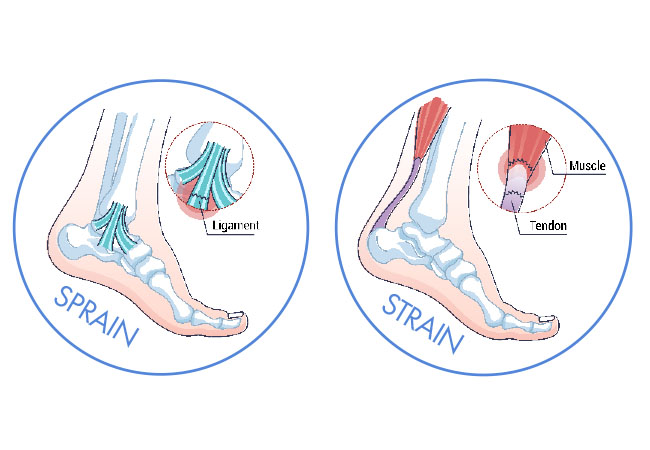
A sprain happens when a ligament (the tissue that connects one bone) is stretched or torn. Sprains are typically the result of a trauma, a deceleration (slowing down) movement or a sudden change in direction. The most common symptoms include pain, inflammation, muscle spasm, and sometimes an inability to move the joints where the injury occurred. Strains occur in a muscle or tendon (the tissue that connects muscle to bone). Strains usually happen when the muscle suddenly contracts, like running, jumping, or repetitive and awkward movements. The symptoms of strains are similar to those associated with sprains, making them difficult to tell apart without doing a physical therapy examination.
There are three grades of sprains/strains that outline the severity of the injury.
Grade 1:
- Mild pain (rarely moderate or severe pain)
- No bruising
- Minimal swelling (sometimes no swelling)
- Tenderness to the touch at the site of the
injury
Grade 2:
- Mild to moderate pain (rarely severe pain)
- Some bruising
- Mild to moderate swelling around the injury
- Tenderness to touch on-site and around
the injury - Often painful to put weight on your injured limb
Grade 3:
- Moderate to severe pain
- Significant bruising
- Moderate to severe swelling throughout the limb
- Tenderness to touch at the site and surrounding area of the injury
- Often severe pain or inability to put weight through the injured area
- Ligaments are torn (ruptured), and the joint will be loose/unstable
from tearing, so it may require surgical intervention or the use of
bracing to facilitate healing.
If you are unsure whether you sustained a sprain or strain, our
physical therapists can help you figure it out.
Healthy Recipe – Apple Pie Chia Smoothie

Yes, this actually tastes like pie!
So drink this instead and save yourself a ton of calories. The chia seeds have plenty of fiber and protein to keep you full until lunch.
- 1 apple cut into small pieces
- 1 cup almond milk
- 2 tablespoon chia seeds
- 1 tablespoon maple syrup
- ½ teaspoon vanilla extract
- ½ teaspoon cinnamon
- A pinch nutmeg and salt
Blend all ingredients until smooth; add ice if desired.
Home Exercise – Seated Extended Heel Pumps
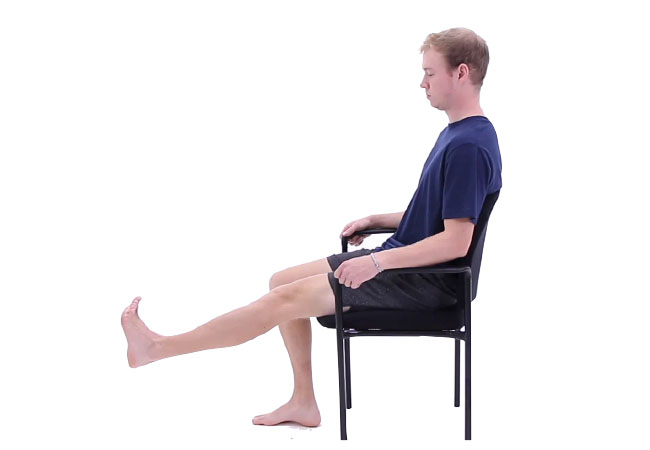
Relieves foot/ankle tension and improves flexibility.
Start by sitting upright in a chair with one leg extended out in front of you and your foot slightly off the ground. Drive your toes up toward your knee by flexing your ankle joint and hold this pressure for 5 seconds. Relax your foot. Repeat 3 sets, 5 reps each.