

Finding Relief After Total Hip or Knee Replacements

Hip and knee replacements are among the most common surgeries in the United States. Every year, surgeons perform around 800,000 knee replacements and 450,000 hip replacements — and that number is expected to grow as the population ages.
But the surgeries themselves don’t show the entire picture. While they can offer lasting relief for people suffering from osteoarthritis, they also require extensive rehabilitation to ensure success.
Most people can expect to spend six months to a year restoring the strength and mobility in their lower body. If you skip out on post-surgical physical therapy, especially immediately after your procedure, you might continue to struggle with joint pain and restrictions in your range of motion.
Fortunately, physical therapy at Joint Restoration Center can help see you through your recovery and rehabilitation.

Madeline’s Story: Finding the Trail Again
When Madeline underwent a total hip replacement at the age of 65, she had one goal in mind: to hike again.
Madeline knew that, to achieve her goal, she would need to take her post-surgical physical therapy very seriously. She began physical therapy as soon as she was cleared by her surgeon, three days after her procedure. Her PT guided her through gentle mobility exercises and helped her move around the room with her walker.
We also helped Madeline manage her initial pain levels with joint mobilizations, soft tissue manipulation, and other manual therapy techniques. In addition to helping with pain, these techniques can reduce the development of scar tissue, which can cause long-term pain issues.
It wasn’t long before Madeline began more intensive physical therapy. At her first appointment, she let her therapist know her dream of taking up hiking again, and they worked together to help Madeline achieve her goal.
Here’s what Madeline’s post-surgical therapy involved:
- Step 1: Improving her hip’s range of motion through targeted stretches and range-of-motion exercises
- Step 2: Building strength in the muscles surrounding and supporting her hip, helping stabilize her new joint.
- Step 3: Activity-focused training to help Madeline restore her balance and ability to walk, climb stairs, and perform other movements crucial in daily life. As Madeline improved, her therapist began focusing on exercises that emulated hiking (such as walking up an incline) so Madeline could hit the trails again.
- Step 4: A hike with her new hip. After completing her physical therapy, Madeline’s PT cleared her for a gentle, three-mile hike — and Madeline celebrated every step!

Frank’s Story: Starting Early for Lasting Relief
Frank didn’t have a clearly defined physical goal when he underwent his total knee replacement at age 78. He’d never been particularly active, and his knee pain only made him more sedentary.
To help ensure Frank had the best possible outcomes, we actually started his physical therapy before he even went into surgery. Research shows that pre-surgical physical therapy (“prehab”) gives you a solid foundation for rehabilitation. So we set Frank up for success with a six-week prehab program that included the following:
- General fitness strategies to ensure he was in good health for his procedure
- Exercises to improve the strength and mobility of his knee joint
- Practice using a walker
Frank had initially been nervous about his surgery, but his prehab program helped build his confidence and gave him a taste of what to expect from his post-surgical rehabilitation. In fact, he was pleased to learn that his early exercises were very similar to those he had done during prehab!
Frank’s rehabilitation proceeded similarly to Madeline’s, even though he wasn’t working toward a specific goal. We worked with him to manage his pain and slowly began mobilizing his knee. As his range of motion improved, we began incorporating strengthening exercises and functional training activities so he could perform day-to-day tasks.
Physical therapy was a lot of work for Frank, but it paid off in the end: he no longer struggled with joint pain, and he was far more active and mobile than he’d been in years.
Sources:
https://rheumatology.org/patients/joint-replacement-surgery
https://www.choosept.com/guide/physical-therapy-guide-total-knee-replacement
https://www.choosept.com/guide/physical-therapy-guide-total-hip-replacement-arthroplasty
https://www.sciencedirect.com/science/article/abs/pii/S187706572200077X
We Can Help You Find Relief, Too!
Are you scheduled for a total hip or knee replacement? Don’t underestimate the importance of physical therapy in your rehabilitation.
Call Joint Restoration Center today to learn more about how we can help!
Our Patients Get Great Results
“These people are great!
I’ve referred all my friends.“
– Google 5-Star Review
Exercise of the Month
Knee Extension AROM
Start by sitting up straight on the edge of a table with your legs hanging off. Slowly extend one knee all the way until your leg is straight without letting your back round. Then, allow your knee to bend back down. Repeat with your other leg. Continue alternating as directed by your physical therapist. Perform 3 sets of 10 reps.



Feel Better by Eating Better!
Gluten-Free Breakfast Hash
Ingredients:
- 5 medium-large potatoes washed and peeled
- 1 large white onion chopped
- 2 tbsp extra virgin olive oil
- 2 green onions trimmed and finely chopped
- 4 eggs
- 1/4 cup shredded cheddar cheese
- salt and pepper to taste
- 1/4 tsp paprika
Directions:
Cut potatoes into 1/2 inch wedges. Heat olive oil in a large cast iron skillet or frying pan over medium heat. Cook potatoes for 25 minutes, covered, stirring every 4-5 minutes. Add chopped white onion. Cook for another 5-10 minutes, uncovered, and stirring constantly.
When potatoes are crispy and golden brown, add green onions, salt, and pepper. Stir through. With your spatula, make four wells in the potatoes and crack an egg into each one. Sprinkle shredded cheddar all around. Cook until the egg whites are set, or until your liking. Cover pan with lid for poached eggs. Add more olive oil on eggs if desired. Sprinkle eggs with a pinch of paprika seasoning. Serve immediately.
Meet the Staff!

Gary Merriweather
DPT, Cert. DN
Can I Avoid a Total Hip or Knee Replacement?
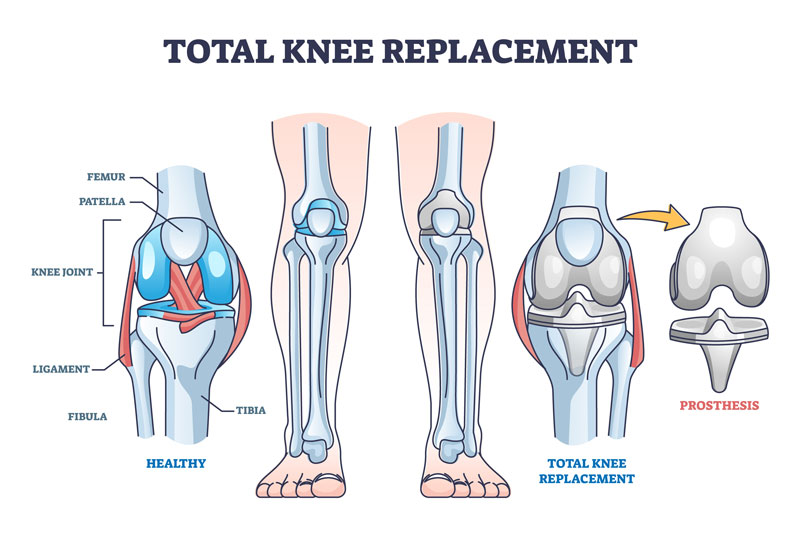
No one wants to undergo surgery. It’s often expensive, and it can bring with it a host of risks and complications. So, if you’re struggling with hip or knee osteoarthritis, you might be wondering — can I skip surgery altogether?
The short answer? It’s very possible!
Osteoarthritis has no cure. However, you can slow its progression by staying active and living a generally healthy lifestyle. In fact, surgeons won’t actually perform a total joint replacement until they’ve seen that non-invasive treatments — such as physical therapy — aren’t effectively managing the condition.
As with most degenerative conditions, the earlier you start, the better. If you already have an OA diagnosis, the Joint Restoration Center physical therapists can work with you to develop a customized management program that might include the following:
- An aerobic exercise plan based on your interests and abilities
- Targeted strengthening and stretching exercises to improve joint health
- Strategies for reducing pressure on your joints
- Strategies for improving your overall health and wellness
Even if you don’t have a diagnosis, following up on joint pain is essential, especially as you get older. Our physical therapists can let you know if that pain in your knee or hip is due to osteoarthritis or some other cause, such as an injury or muscular imbalance.
Want to learn more about successfully managing osteoarthritis without surgery? Call to speak to our friendly staff today!