

A message from Dr. Christian, DPT
Strengthening our muscles is always a good idea, right? You would be hard-pressed to find research that finds that being stronger is worse than being weaker. Oftentimes, our pain can be treated simply by strengthening certain muscle groups which is especially true when our back and neck are involved.
Strengthening the right muscle groups and good posture tend to go hand-in-hand. Neck pain can increase significantly when we adopt a posture that puts more pressure on certain parts of our neck. Strengthening the muscles whose job is to pull the neck into a good posture seems like a great idea to take care of pain! Easy enough, right? An excellent strategy is to strengthen the weak muscles to improve posture, which in turn allows the neck to move freely and decrease your pain. This strategy can work well for back pain, too. That nagging pain between the shoulder blades can be due to weakness of the muscles that pull the shoulder blades back, as they are too weak to hold them in their ideal position. Physical therapy is a great solution to allow a healthcare professional to find these strength imbalances in our bodies that are contributing to pain. A trained eye from our PT department can pinpoint small and large muscles that aren’t keeping up, and isolate and train those muscles to activate and pull our spine into the position it was designed to maintain. If you are ready to get stronger and experience less pain, schedule your appointment today!
Have you been told that strengthening will help your back or neck pain but aren’t sure how it could? At Joint Restoration Center, our highly trained physical therapists will explain not only why strengthening is important but precisely what exercises are most effective at addressing your specific weaknesses.
Back and neck pain are two of the most common issues that American adults say affect their everyday routines. In addition, they are also two of the leading reasons people seek medical intervention, and two of the most common causes people have to miss work.
While these may feel like two separate issues, it is somewhat expected that neck and back pain are related. In both cases, weakness may be contributing to the problem, and strengthening is part of the solution for lasting relief.
Call Joint Restoration Center today to make an appointment. With guidance from our physical therapists, you will learn what exercises will address your weaknesses and provide solutions to your back or neck pain!
How Muscles Affect Neck Pain
There are many reasons why neck pain may develop, including everything from sudden incidents like a car accident or a slip-and fall injury, to more chronic issues, such as regularly hunching over a desk at work with poor posture. The majority of the time, neck pain starts as a seemingly small concern. Pain can develop due to a soft tissue sprain/strain or changes to the joint itself. Prolonged sitting can lead to a forward head position resulting in tension to soft tissue (i.e., muscles, tendons, and ligaments). Our neck muscles function at their best when we move them. So holding our heads in one position leads to irritation of the muscles and affects our ability to move our head and neck. It also is what starts the cycle of chronic pain. Learning to strengthen the upper back and neck muscles helps alleviate the pressure and simultaneously makes it easier to hold your head with proper posture. Working with a physical therapist to address neck pain is a wise decision!
How Muscles Affect Back Pain
Back pain impacts more than 80% of the population, and many deal with that pain long-term. One of the biggest problems with back pain is that it is difficult to work around it once it develops. Many people begin to modify their movements and, as a result, put more pressure on their muscles which eventually just leads to more back pain. In the lower back, the muscles that support the spine are often called the “core.” When thinking of the core, think of an apple core… it goes all the way around. So the core muscles of the spine include:
- The abdominal muscles.
- The lower back muscles.
- Your buttock muscles.
- The muscles of the hips and pelvis
Physical therapy can address back pain by helping to improve your spinal mobility and strengthen the muscles in your back and surrounding areas. Using targeted massage to reduce tension in the muscles makes your muscles more likely to respond to strengthening exercises. In many situations, working with a physical therapist to improve core strength can significantly reduce the severity of your back pain.
How Physical Therapy Can Help You Strengthen Your Back and Neck Muscles
Our physical therapists perform thorough physical examinations to identify the source of your pain. We use this information to provide you with a comprehensive program tailored to your specific needs. There are many reasons to improve the strength of the muscles that support the neck and back. When you improve your strength, you are likely to improve your posture and thereby reduce your risk of developing further back or neck pain. Furthermore, the exercise that helps improve your strength often helps reduce the stress on the spine joints. If you haven’t spent much time building strength in the past, working with a physical therapist is a great place to start. Your physical therapist will guide you through proper postures and strength training exercises to reduce further risk of injury.
Contact Our Clinic Today!
You deserve to feel your best. Call Joint Restoration Center today to discover how to help relieve your pain quickly and improve your strength to prevent future pain from hindering your daily activities.
Patient Success Story

“Before starting at Joint Restoration Center I had been unable to walk unassisted for 3 years. Now I can walk totally on my own with just a small limp.” — Rhonda K.
Home Exercise
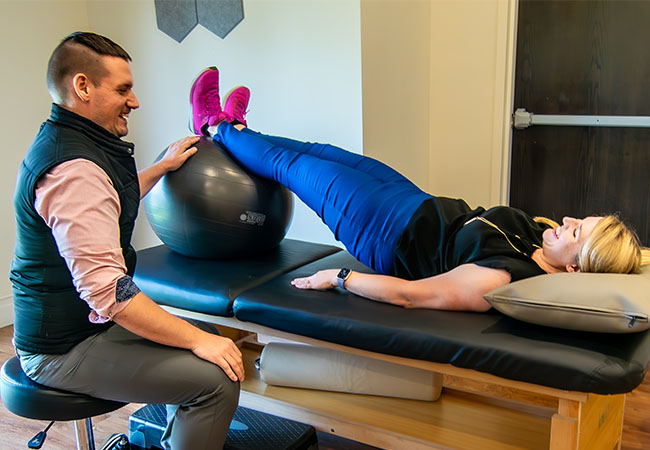
Try this exercise to strengthen your core – Core Kickouts

Start by lying on your back with your knees bent to 90 degrees and your feet on the floor. Slowly kick one leg straight out and then bring it back in. Repeat on the other side. Make sure to keep your abdominals braced. Repeat 3 sets, 10 reps each.
Ready To Start Your Journey To Relief?
Request your appointment today!